
QOwnNotesQOwnNotes
Rozpoczęcie
Instalacja
  • Ask question
  • Ask for feature
  • Report bug
  • Telegram Channel
  • Matrix/Element.io Room
  • Gitter Chat
  • IRC Channel
  • Mastodon
  • Twitter
  • Facebook
Wesprzyj
  • English
  • Deutsch
  • Italiano
  • Français
  • Español
  • فارسی
  • Nederlands
  • Magyar
  • العربية
  • Polski
  • 한국어
GitHub
Rozpoczęcie
Instalacja
  • Ask question
  • Ask for feature
  • Report bug
  • Telegram Channel
  • Matrix/Element.io Room
  • Gitter Chat
  • IRC Channel
  • Mastodon
  • Twitter
  • Facebook
Wesprzyj
  • English
  • Deutsch
  • Italiano
  • Français
  • Español
  • فارسی
  • Nederlands
  • Magyar
  • العربية
  • Polski
  • 한국어
GitHub
  • Rozpoczęcie

    • Przegląd
    • Pojęcie
    • Demo QOwnNotes
    • Obniżka cen
    • Importowanie notatek
    • Argumenty interfejsu wiersza poleceń
    • Rozszerzenie przeglądarki QOwnNotes Web Companion
    • Command-line Snippet Manager
    • QOwnNotes Web App
    • QOwnNotesAPI Nextcloud App
    • Note relations panel
    • Wyszukiwanie notatek
    • Shortcuts
    • Git versioning
  • Instalacja

    • Instalacja
    • Instalacja w systemie Ubuntu Linux, elementary OS oraz Linux Mint
    • Zainstaluj w systemie Microsoft Windows™
    • Install on macOS™
    • Zainstaluj na Debian Linux
    • Zainstaluj na openSUSE Linux
    • Zainstaluj w Fedorze Linux
    • Install as Snap
    • Zainstaluj jako Flatpak
    • Instalacja jako AppImage
    • Install via Nix
    • Zainstaluj na Arch Linux
    • Zainstaluj na Solus
    • Zainstaluj na KaOS Linux
    • Zainstaluj na CentOS Linux
    • Zainstaluj na Raspberry Pi OS
    • Zainstaluj na Gentoo Linux
    • Install on Funtoo Linux
    • Install on Void Linux
    • Zainstaluj na Slackware Linux
    • Install on FreeBSD
    • Building QOwnNotes
  • Edytor

    • Sprawdzanie pisowni
    • AI support
    • Formaty czasu
  • Skrypty

    • QOwnNotes Scripting
    • Methods and objects QOwnNotes provides
    • Haki
    • Odsłonięte zajęcia
  • Współpraca

    • Zaangażuj się w projekt
    • Code of Conduct
    • Opiekunowie
    • Tłumaczenie
    • Wspomóż projekt
    • Sponsorzy
  • FAQ

    • Jak mogę wyświetlić sam panel podglądu bez panelu edycji notatki?
    • Gdzie mogę znaleźć opinie innych użytkowników o QOwnNotes?
    • Dlaczego metryki?
  • Blog (po angielsku)

    • Overview
    • QOwnNotes Webpage Relaunch with VuePress 2, Vue.js 3, and Vuetify 3
    • Universal binary for macOS
    • Note relations panel
    • AI support was added to QOwnNotes
    • Source Archive switched from TuxFamily to GitHub Releases
    • Nextcloud Deck integration in QOwnNotes
    • QOwnNotes UI End2End Tests with the help of NixOS
    • Please test Qt6 version of QOwnNotes from a new PPA for Ubuntu Linux
    • Evernote import for huge files
    • Happy 1000th release of QOwnNotes
    • Polish website translation
    • Working with multiple notes
    • QOwnNotes command-line snippet manager
    • Nextcloud note versions
    • Manage orphaned image files and attachments
    • Linking of note headings
    • Tor Hidden Service Webpage
    • Use workspaces to manage different layouts of the user interface
    • Auto-complete text in note editor
    • Open links in the note editor
    • Solve simple equations in the note editor
    • Auto-format Markdown tables
    • QOwnNotes Mastodon page
    • Repository for Debian 11
    • Joplin import
    • Send photos from your mobile phone to QOwnNotes on the desktop
    • Four new languages added to the website
    • QOwnNotes Demo
    • Markdown explanation
    • Webpage translation
    • QOwnNotes for Ubuntu 21.04 Hirsute Hippo
    • QOwnNotes for Fedora 33
    • Release and blog posting automation
    • Legacy update service up again
    • RSS Feeds are back in place
    • Time Flies Podcast episode with interview about QOwnNotes
    • Bookmark management with QOwnNotes and Web Companion browser extension
    • Firefox extension on Firefox Add-ons page
    • Chrome extension in Chrome Web Store
    • QOwnNotes Web Companion Chrome extension
    • 500th release of QOwnNotes
    • QOwnNotes Telegram Group
    • Vim mode
    • QOwnNotes for openSUSE Leap 15, SUSE Linux Enterprise 15 and SUSE Linux Enterprise 12 SP3
    • QOwnNotes featured on LINUX Unplugged podcast and by Ubuntu
    • Interview for ownCloud
    • QOwnNotes for Fedora 27
    • QOwnNotes reviewed in German magazine c't
    • QOwnNotesAPI in the ownCloud Marketplace
    • QOwnNotes as AppImage
    • QOwnNotes for Debian 9.0, Fedora 26 and openSUSE Leap 42.3
    • Script repository and script settings variables
    • Fedora 25 release and new documentation page
    • Solus package for QOwnNotes
    • Automatic updates in Windows and macOS
    • Note encryption with keybase.io or directly with PGP
    • Evernote import
    • Portable mode
    • QOwnNotes on webupd8.org
    • QOwnNotes featured on the Linux Voice Podcast
    • QOwnNotes snap
    • QOwnNotes review in British magazine Linux Format
    • QOwnNotes Slackware Linux Repository
    • QOwnNotes review
    • QOwnNotes IRC
    • QOwnNotes now has scripting support
    • QOwnNotes is the Desktop App Pick on the Linux Action Show
    • QOwnNotes got featured in Linux Voice 25
    • QOwnNotes Gentoo Linux Overlay
    • Translate QOwnNotes on Crowdin
    • QOwnNotes 1.0 out now in 6 languages and with Freedesktop theme icons support
    • QOwnNotes software repository for Debian Linux
    • QOwnNotes package on the Arch User Repository
    • QOwnNotes software repository for Arch Linux
    • Webpage redesign
    • Qt widget QMarkdownTextEdit now a separate project for developer's pleasure
    • New release version RSS feed
    • New Linux software repositories and todo list support
    • QOwnNotes on Linux Unplugged
    • Build and release systems for QOwnNotes for Linux, macOS and Windows!
    • Links to other notes or files are now possible in QOwnNotes
  • Dziennik zmian (po angielsku)

    • QOwnNotes Changelog

Command-line Snippet Manager

Możesz użyć Menedżera fragmentów wiersza polecenia QOwnNotes do wykonywania fragmentów poleceń zapisanych w notatkach w QOwnNotes z wiersza poleceń.
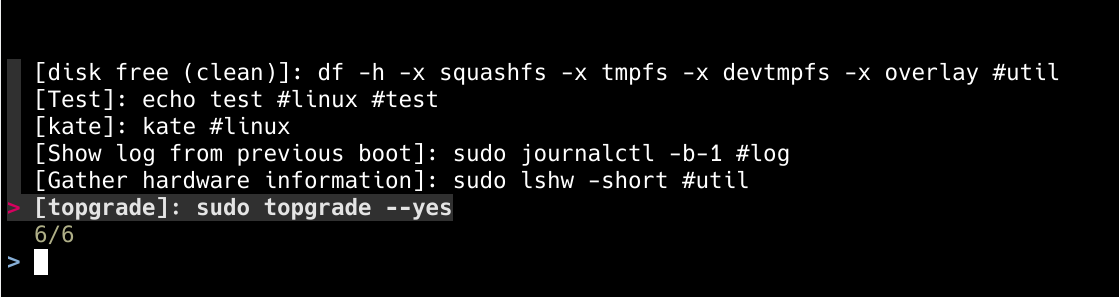
qc

Możesz używać notatek ze specjalnym tagiem do przechowywania fragmentów poleceń, które możesz wykonywać z poziomu menedżera fragmentów wiersza poleceń.
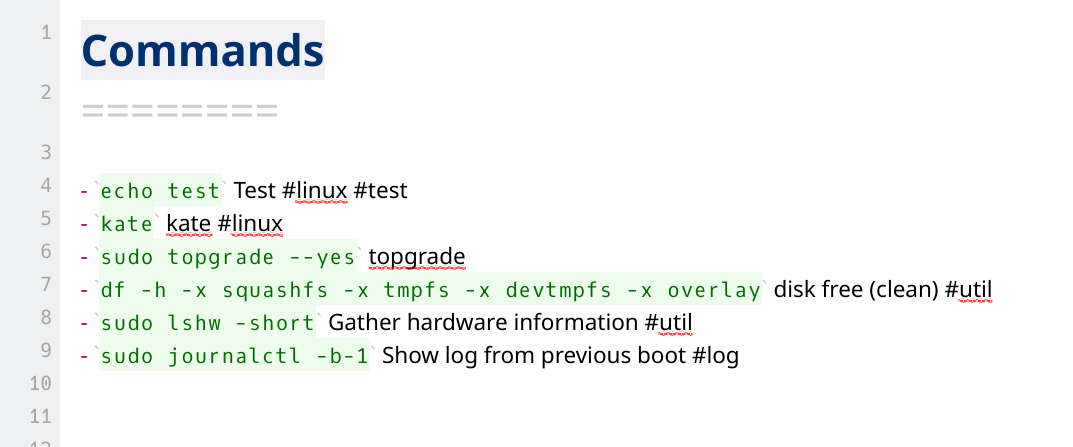
commands

Instalacja

Odwiedź latest release page i pobierz potrzebną wersję.

Porady

Jeśli masz zainstalowane jq, możesz również użyć tego fragmentu kodu, aby pobrać i zainstalować na przykład najnowszą aplikację Linux AMD64 AppImage do /usr/local/bin/qc:

curl https://api.github.com/repos/qownnotes/qc/releases/latest | \
jq '.assets[] | select(.browser_download_url | endswith("_linux_amd64.tar.gz")) | .browser_download_url' | \
xargs curl -Lo /tmp/qc.tar.gz && \
tar xfz /tmp/qc.tar.gz -C /tmp && \
rm /tmp/qc.tar.gz && \
sudo mv /tmp/qc /usr/local/bin/qc && \
/usr/local/bin/qc --version

Zależności

fzf (wyszukiwanie rozmyte) lub peco (starsze, ale z większym prawdopodobieństwem zostaną zainstalowane domyślnie) muszą być zainstalowane, aby wyszukiwać polecenia w wierszu poleceń.

Porady

Domyślnie do wyszukiwania używane jest fzf, ale możesz użyć peco, ustawiając go za pomocą qc configure.

Organizować coś
socket-server-token

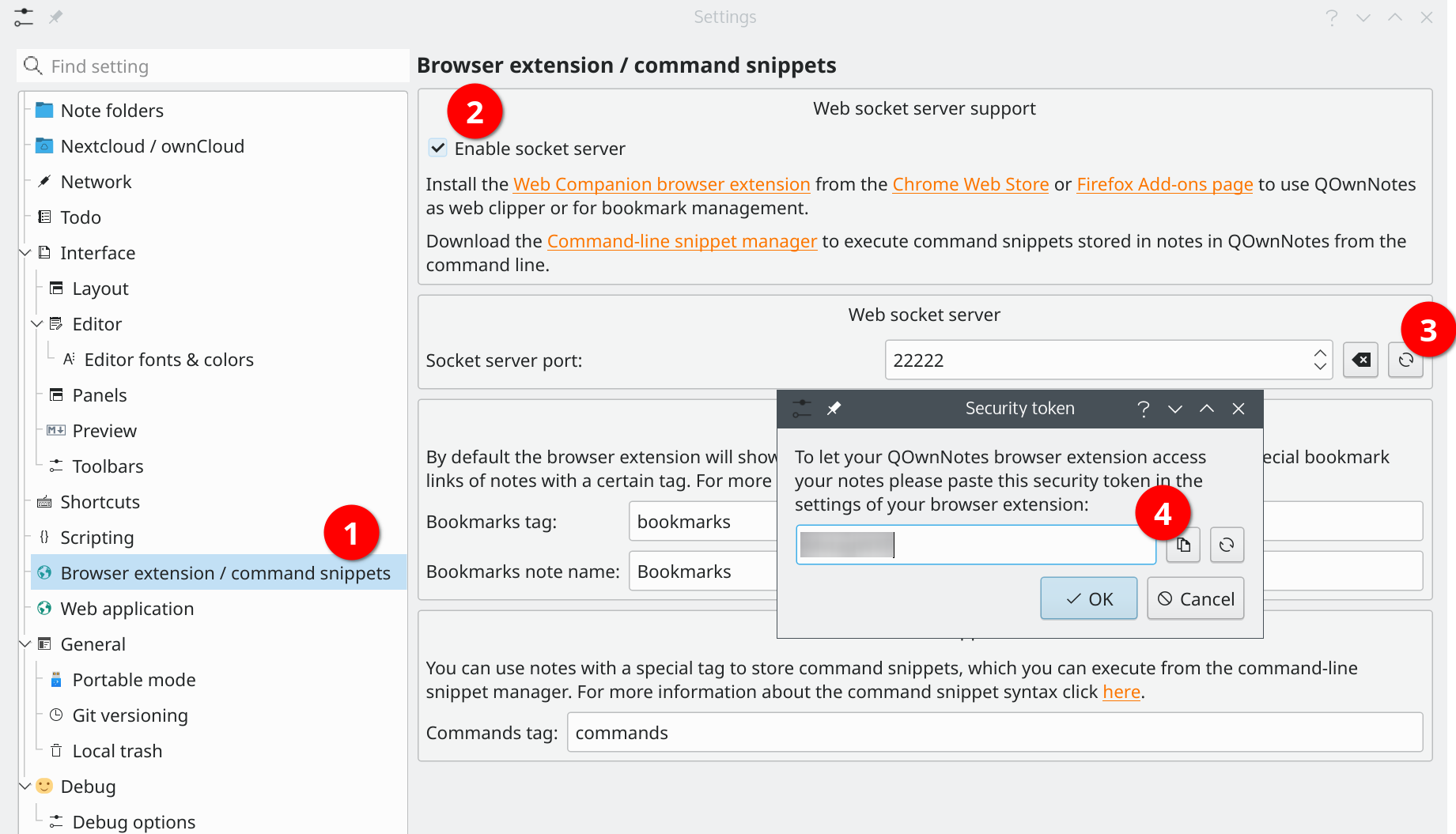
Before you are using the snippet manager you need to enable the Web socket server (2) in the Browser extension / command snippets (1) settings in QOwnNotes.

Następnie musisz pokazać token bezpieczeństwa (3) i skopiować go (4).

Teraz otwórz plik konfiguracyjny menedżera snippetów za pomocą:

# Skonfiguruj menedżera fragmentów
qc configure

I umieść token bezpieczeństwa w atrybucie token:

[QOwnNotes]
token = "yourtokenhere"

Porady

W ustawieniach QOwnNotes możesz również ustawić, jaki znacznik notatki ma być używany do wyszukiwania poleceń w notatkach. Domyślnie używany jest tag polecenia.

Składnia fragmentów poleceń

Możesz używać list nieuporządkowanych z wbudowanymi blokami kodu do przechowywania fragmentów poleceń. Wszystkie notatki z tagiem polecenia są przeszukiwane pod kątem fragmentów poleceń.

Jeśli dodasz cmd: przed blokiem kodu w wierszu, polecenie zostanie również znalezione w bieżącej notatce, niezależnie od tagów notatek.

- `echo I am a command` I am a description #tag1 #tag2 #tag3

* `echo I am also a command` I am a description #tag3 #tag4 #tag5

- cmd: `echo I will be found in the current note` This command will be found in the current note regardless of note tags

<!-- Example for asking for user input -->

- `read -p "PR ID: " id && git fetch origin pull/$id/head:pull-$id && git checkout pull-$id` Ask for pull request ID and checkout pull request

bash or shell code blocks, poprzedzone nagłówkiem 2 lub wyższym jako opis, mogą być również używane we fragmentach poleceń. Tagi są również obsługiwane, jeśli znajdują się między nagłówkiem a blokiem kodu.

## Zrób to z blokiem kodu "bash"

- ten tekst zostanie zignorowany
- ale można używać tagów: #tag1 #tag2

```bash
echo zrób to
 echo zrób to
```


## Zrób coś innego z blokiem kodu „sh”

```sh
echo zrób coś innego
 echo zrób coś innego
```

Powyższy przykład da w wyniku dwa fragmenty poleceń, pierwszy z dwoma tagami tag1 i tag2.

Stosowanie

# Wyszukaj i wykonaj fragmenty poleceń
qc exec
# Wyszukaj i wydrukuj fragmenty poleceń
wyszukiwanie qc

Konfiguracja

Uruchom konfigurację qc.

[General]
  editor = "vim"            # your favorite text editor
  column = 40               # column size for list command
  selectcmd = "fzf"         # selector command for edit command (fzf or peco)
  sortby = ""               # specify how snippets get sorted (recency (default), -recency, description, -description, command, -command, output, -output)

[QOwnNotes]
  token = "MvTagHXF"        # your QOwnNotes API token
  websocket_port = 22222    # websocket port in QOwnNotes

Zakończenie powłoki

Możesz wygenerować kod uzupełniania powłoki dla swojej powłoki za pomocą uzupełniania qc <shell>.

Na przykład do muszli rybnej możesz użyć:

qc zakończenie ryba > ~/.config/fish/completions/qc.fish
Prev
Rozszerzenie przeglądarki QOwnNotes Web Companion
Next
QOwnNotes Web App